Friday, 24 August 2007

QUÊ HƯƠNG- NGÀY VỀ (August 25, 2007)


1. Quê hương- Nhạc: Giáp Văn Thạch; Thơ: Đỗ Trung Quân- Giọng hát Nghệ sỹ TUYẾT TUYẾT & Dàn nhạc giao hưởng năm 1988 (một trong những bản phối khí xuất sắc nhất sau 1975)

2. Vu1ec1 thu0103m Mu1eb9- Su00e1ng tu00e1c: Tru1ea7n Chung- Giu1ecdng hu00e1t Nghu1ec7 su1ef9 KIu1ec0U Hu01afNG nu0103m 1980

3. Ngu00e0y vu1ec1- Su00e1ng tu00e1c: Hou00e0ng Giu00e1c- Video clip u0111u01b0u1ee3c thu1ef1c hiu1ec7n vu1edbi phu1ea7n biu1ec3u diu1ec5n cu1ee7a Nghu1ec7 su1ef9 THANH LONG BASS

Thursday, 23 August 2007

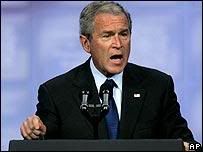
Bác Bush làm em ngứa nghề (Entry for August 23, 2007)


Mr President,

This is what you are quoted by BBC just now as saying yesterday "Just like in Vietnam, if we would leave before the job here [Iraq] is done, these enemies would follow us home" (BBC worldservice 23 Aug.2007).

Don't you think such an analogy is, again, oversimplified ?

And this is what I wrote 3 years ago:

The Gulf is no Vietnam

‘No two wars are alike.’[1] The analogy between Vietnam and the Gulf, therefore, was flawed in many particulars. There are a number of important distinctions between the Persian Gulf War of 1991 and the Vietnam War. The most important one is obvious, that the Vietnam War belonged to the Cold War era while the war in the Persian Gulf was ‘the first post- Cold War crisis.’[2] In the post-Cold War era, ‘the argument over ideology had largely disappeared.’[3] There was little concern about the disposition of the Soviets or the Chinese in the Gulf Crisis as there had been in Vietnam. China’s borders, of course, were not threatened by the US action in Kuwait, and the Soviet Union in 1991 was on the verge of economic and political disintegration. Donaldson observed, ‘for the first time since World War II the United States could initiate a major military intervention outside its own hemisphere without having to fear Communists reprisals, and without the fear that the war might escalate into a nuclear war.’[4] And while the United Nations was made paralyzed during the Vietnam War, the US’s ‘improving relations with Moscow and … satisfactory ones with China’ offered the United Nations an opportunity to ‘correct the failings of the League of Nations’, to put an end to the ‘stalemate’ of the Security Council, and the possibility of the UN Security Council members to work together ‘in forging international unity to oppose Iraq.’[5] The United States did obtain this cooperation and thus had a ‘concert of power’[6] operating under the auspices of the United Nations.

When President Bush said repeatedly that the Gulf War would not be ‘another Vietnam’, what he meant was his administration’s determination overcome the opponents who argued that ‘Iraq was Arabic for Vietnam’[7], envisioning another unpopular, unwinnable war, this time in the desert. ‘Another Vietnam’ was the shorthand for ‘another defeat’. But ‘the Gulf is no Vietnam’ in all dimensions. Retired Colonel Joseph P. Martino of the US Air Force argued that there were no obvious similarities between Vietnam and the the situation in the Gulf in political cause, geographic conditions, historical context, and military circumstances. [8] In his analysis, Martino provided abundant statistical figures and information that strongly supported the contrast the made between Vietnam and the Gulf (Iraq).

The United States intervened in a ‘civil war’[9] in which its side lacked a popular base. The US sought to demonstrate that the war was the result of aggression by one state against another – North Vietnam versus South Vietnam – but could never do so convincingly. In the Gulf there was no doubt that the United States was seeking to reverse a blatant case of aggression. Consequently, whereas with Vietnam the international community was generally dubious of the way the war was both justified and prosecuted, in the Gulf the United States was part of a remarkable United Nations consensus. Vietnam’s awkward terrain of jungles and paddy-fields, its mysterious and determined enemy, and its confused political situation conspired to show up American power at its worst. The Gulf had created perfect conditions to show it off to full effect: open and relatively uninhabited terrain; an enemy prepared to fight a regular battle instead of shifty guerrilla warfare, yet inferior in the quality of both its manpower and is equipment; an aggressor who manifestly fitted the part. When US forces pulled out of Vietnam they were demoralized, almost mutinous, and enjoyed minimal respect at home. The mobilization of forces in Vietnam was based mostly on draftees while in the Gulf War this system was terminated and moved to a volunteer army… On all accounts, the Gulf was no Vietnam. As Freedman and Karsh concluded, ‘the Vietnam analogy was fundamentally misleading.’[10]

Furthermore, ‘Vietnam was a unique historical experience.’[11] Thus, any lesson drawn from Vietnam ‘may have only limited utility in determining the proper course of action in any subsequent scenario.’[12] Meanwhile, ‘there is little agreement on just what the lessons of Vietnam are.’[13] As discussed in Chapter One, President Bush and his predecessor, Ronald Reagan were convinced that the United States would have won in the Vietnam War had the US army not had ‘their hands tied behind backs.’ Both Reagan and Bush spoke of the lessons they drew from the Vietnam experience as if military power had not been used massively in Vietnam. By blaming only the ‘restraint’, if any, on the use of force for the American debacle in Vietnam, those revisionist leaders prevented themselves from ‘facing the truth’ since this hides the real shaping factors behind the Vietnam Syndrome. In his startling mea culpa memoirs, In Retrospect: the Tragedy and Lessons of Vietnam, Former Secretary of Defense Robert S. McNamara identified ‘eleven major causes for our disaster in Vietnam.’[14] These major causes can be grouped into five categories- amounting to misjudgments of America’s adversaries, a failure to grasp the limitations of military power, misjudgments of the American people, misjudgments of international opinion, and general bad management. McNamara believes that pointing out the mistakes ‘allows us to map the lessons of Vietnam, and… to apply them to the post-Cold War world.’[15] McNamara lessons may seem flawed too, but at least it confirmed that there is little agreement on the lessons of Vietnam, even among policy-makers.

Of course, the Gulf War’s success could have rekindled the notion that massive uses of force can be the means to achieve moral, legal and practical interests that serve both the United States and the international community. However, because the nature of the conflict in the Vietnam War was so fundamentally different from that of the Gulf War, the application of this ‘lesson’ to the Gulf would prove to be ‘more the exception than the rule.’[16] When the Vietnam-like situations emerged, the Vietnam Syndrome came alive again.


[1] Parmet, Herbert S. (2001), George Bush: The Life of a Lone Star Yankee, Transaction Publishers: New Brunswick & London, p.477

[2] Hess, Gary R. (2002), op cit, p.153

[3] Borer, Douglas A. (1999), Superpowers Defeated: Vietnam and Afghanistan Compared, Frank Cass: London & Portland, Or, p. 212

[4] Donaldson, Gary A. (1996), op cit, p.141

[5] Bush’s memoirs, cited in Hess, Gary R. (2002), op cit, p.162

[6] Simons, Geoff (1998), op cit, p.332

[7] Borer, Douglas A. (1999), op cit, p.211

[8] See Col. Joseph P. Martino (Ret.), Vietnam and Desert Storm: Learning the Right Lessons from Vietnam for the Post-Cold War Era,

website: http://www.vietnam.ttu.edu/vietnamcenter/events/1996_Symposium/96papers/lesson.htm

[9] There has never been an agreed name for the Vietnam War. Different people from different political and academic perspectives use different names, such as the Vietnamese resistance against the American imperialism; war by proxies, civil war, American War…. On this point, see, for instance, Lawrence E. Grinter and Perter M. Dunn (eds.) (1987), The American War in Vietnam: Lessons, Legacies, and Implications for Future Conflicts, Green Wood Press: New York and London

[10] Freedman, Lawrence & Karsh, Efraim (1994), op cit, p.283

[11] Borer, Douglas A. (1999), op cit, p.213

[12] Ibid.

[13] Ibid.

[14] McNamara, Robert S. (1995), op cit, p.320-3

[15] Ibid., p.324

[16] Jentleson, Bruce W. (2000), op cit, p.284
Wednesday, 22 August 2007

Too busy for a Friend (Entry for August 22, 2007)

thought it was kinda spam, but it isn't. Thanks, anh Tho, for sharing.

Too Busy for a Friend...

One day a teacher asked her students to list the names of the other students in the room on two sheets of paper, leaving a space between each name.

Then she told them to think of the nicest thing they could say about each of their classmates and write it down.

It took the remainder of the class period to finish their assignment, and as the students left the room, each one handed in the papers.

That Saturday, the teacher wrote down the name of each student on a separate sheet of paper, and listed what everyone else had said about that individual.

On Monday she gave each student his or her list. Before long, the entire class was smiling. "Really?" she heard whispered. "I never knew that I meant anything to anyone!" and, "I didn't know others liked me so much," were most of the comments.

No one ever mentioned those papers in class again. She never knew if they discussed them after class or with their parents, but it didn't matter. The exercise had accomplished its purpose. The students were happy with themselves and one another. That group of students moved on.

Several years later, one of the students was killed in Iraq and his teacher attended the funeral of that special student. She had never seen a serviceman in a military coffin before. He looked so handsome, so mature..

The church was packed with his friends. One by one those who loved him took a last walk by the coffin. The teacher was the last one to bless the coffin.

As she stood there, one of the soldiers who acted as pallbearer came up to her. "Were you Mark's math teacher?" he asked. She nodded: "yes."
Then he said: "Mark talked about you a lot."

After the funeral, most of Mark's former classmates went together to a luncheon. Mark's mother and father were there, obviously waiting to speak with his teacher.

"We want to show you something," his father said, taking a wallet out of his pocket "They found this on Mark when he was killed. We thought you might recognize it."

Opening the billfold, he carefully removed two worn pieces of notebook paper that had obviously been taped, folded and refolded many times.
The teacher knew without looking that the papers were the ones on which she
had listed all the good things each of Mark's classmates had said about him.
"Thank you so much for doing that," Mark's mother said. "As you can see,
Mark treasured it."

All of Mark's former classmates started to gather around. Charlie smiled rather sheepishly and said, "I still have my list. It's in the top drawer of my desk at home."

Chuck's wife said, "Chuck asked me to put his in our wedding album."

"I have mine too," Marilyn said. "It's in my diary"

Then Vicki, another classmate, reached into her pocketbook, took out her wallet and showed her worn and frazzled list to the group. "I carry this with me at all times," Vicki said and without batting an eyelash, she continued: "I think we all saved our lists"

That's when the teacher finally sat down and cried. She cried for Mark and for all his friends who would never see him again.

The density of people in society is so thick that we forget that life will end one day. And we don't know when that one day will be.

So please, tell the people you love and care for, that they are special and important. Tell them, before it is too late.

And One Way To Accomplish This Is: Forward this message on. If you do not send it, you will have, once again passed up the wonderful opportunity to do something nice and beautiful.

If you've received this, it is because someone cares for you and it means there is probably at least someone for whom you care.

If you're "too busy" to take those few minutes right now to forward this message on, would this be the VERY first time you didn't do that little thing that would make a difference in your relationships?

The more people that you send this to, the better you'll be at reaching out to those you care about.

Remember, you reap what you sow. What you put into the lives of others comes back into your own.

May Your Day Be Blessed As Special As You Are

Saturday, 18 August 2007

Rạo rực Mùa thu ( August 19, 2007)

img

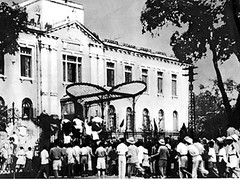
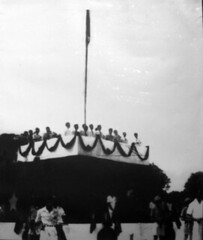
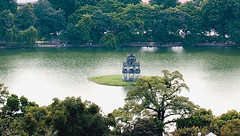
Đây là những giai điệu thu ngập tràn niềm lạc quan, yêu đời, yêu cuộc sống mới. Có khi đó là cảm xúc từ ngày thu lịch sử của dân tộc. Có khi đó là niềm vui giản dị trong một đêm thu lao động của một người thợ. Có khi đó là niềm tin lứa đôi trao cho nhau trên chiến trường lúc sang thu. Đó còn là giai điệu thu của những nhịp bước chân tới trường nơi các em nhỏ. Và thời nào cũng vậy, mùa thu Việt Nam đẹp nhất là mùa thu ở Hà Nội. Tiết thu Hà Nội chắc bao đời vẫn thế. Một chút nắng hè còn vương lại. Một chút gió heo may sớm mai đến cùng hương cốm . Làn nước hồ thu tự bao đời vẫn xanh xao quyến rũ. Nhưng mùa thu Hà Nội từ tháng 8 năm ấy dường như đã rực rỡ thêm với nắng Ba Đình...

img

1. RẠO RỰC MÙA THU- Sáng tác: Văn Ký, biểu diễn: NSND Thanh Hoa

2. BA u0110u00ccNH Nu1eaeNG- Su00e1ng tu00e1c: Bu00f9i Cu00f4ng Ku1ef3- Biu1ec3u diu1ec5n: Hu1ee3p xu01b0u1edbng

3. Mu00d9A TRu00c1I CHu00cdN- Su00e1ng tu00e1c: Lu01b0u Cu1ea7u- Biu1ec3u diu1ec5n: NSu01afT Bu00edch Liu00ean

Ho Guom

4. Hu00c0 Nu1ed8I Mu00d9A THU- Su00e1ng tu00e1c: Vu0169 Thanh- Biu1ec3u diu1ec5n: NSu01afT Ngu1ecdc Lan

5. Hu1ed2I Ku00dd Hu00c0 Nu1ed8I- Su00e1ng tu00e1c: Ngu1ecdc Thanh- Biu1ec3u diu1ec5n: NSND Thanh Hoa

6. Cu1ea2M Xu00daC u0110u00caM THU CA 3- Su00e1ng tu00e1c: Nguyu1ec5n Cu01b0u1eddng- Biu1ec3u diu1ec5n: NSu01afT Quang Phu00e1c

Ha noi THu

7. TIu1ebeNG Mu00d9A THU- Su00e1ng tu00e1c: Phan Lu1ea1c Hoa- Biu1ec3u diu1ec5n: NSND Thanh Hoa

8. NHA TRANG Mu00d9A THU Lu1ea0I Vu1ec0- Su00e1ng tu00e1c: Vu0103n Ku00fd- Biu1ec3u diu1ec5n: NSu01afT Thu Phu01b0u01a1ng

9. Gu1eb6P NHAU GIu1eeeA TRu1edcI THU Hu00c0 Nu1ed8I- Su00e1ng tu00e1c: Phu1ea1m Tuyu00ean

10. Hu00f2a tu1ea5u: Mu00d9A THU- Su00e1ng tu00e1c: Cu00e1t Vu1eadn- Tru00ecnh tu1ea5u: Du00e0n nhu1ea1c Nhu1ea1c viu1ec7n

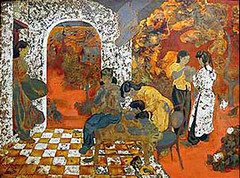
Mua thu- Tran Van Can (Mu00f9a thu- Tranh cu1ee7a Tru1ea7n Vu0103n Cu1ea9n)

Monday, 13 August 2007

DƯƠNG CẦM THU ...( August 14, 15,16 2007)


img

Nhạc sỹ An Thuyên

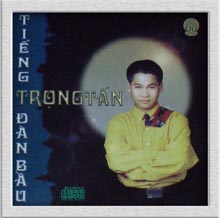
1. Giọng hát TRỌNG TẤN

img

2. Giu1ecdng hu00e1t NSu01afT u0110u1ee8C LONG

(a u0110u1ee9c Long vu1eeba hu00e1t vo bu00e0i nu00e0y xong)
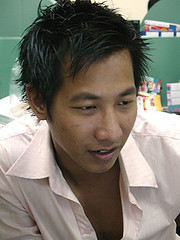
3. Lu00ca ANH Du0168NG & Du01afu01a0NG Cu1ea6M THU KHu00d4NG EM

Lê Anh Dũng chiếm trọn 10/10 phiếu của Ban giám khảo

Theo NSND Trung Kiên, trưởng BGK, cả mười thành viên của Hội đồng giám khảo đã cùng bỏ lá phiếu dành cho Lê Anh Dũng mà không cần đến bất cứ một phần bàn luận nào. Ca khúc Dương cầm thu không em qua giọng ca của Lê Anh Dũng quá thuyết phục và thực sự "hớp hồn" được người nghe như lời của NSƯT Thanh Lam.

Dù đã được trình bày bởi giọng ca đàn anh Trọng Tấn nhưng Dương cầm thu không em tối qua đã mang đậm dấu ấn của chàng sinh viên Nhạc viện này bởi cách xử lý riêng: lên nửa tông so với những người đi trước và hát "cực kỳ có cảm xúc". Anh Dũng, cây guitar acoustic của ban nhạc Sao Mai, một khán giả "đặc biệt" của Sao Mai năm nay đã thừa nhận anh đã "gai người khi nghe Dũng thể hiện đến đoạn cao trào của bài hát. Một phần biểu diễn quá tốt như thế thì không ai có thể phủ nhận được".

img
Lê Anh Dũng "xuất thần" cùng Dương cầm thu không em

Trên thực tế, so với lúc tập Dũng hát chưa thực sự hết 100% khả năng nhưng với một đêm thi đầy áp lực như tối qua, "phần trình diễn này thực sự không còn gì phải nói nhiều khi trao giải nhất", nhạc sỹ Nguyễn Cường phát biểu sau đêm diễn.

Sinh năm 1982, hiện đang là sinh viên nhạc viện Hà Nội, có thể nói không "ngoa" khi dòng thính phòng của Sao Mai năm nay đã thực sự "thuộc về" Lê Anh Dũng khi anh liên tiếp đứng đầu khu vực miền Trung, đêm chung kết dòng thính phòng và cuối cùng là vị trí quán quân đêm xếp hạng. Luôn biết làm mới mình và dành những bất ngờ thú vị cho khán giả, Dũng chính là thí sinh xuất sắc nhất của Sao mai năm nay. Giải thưởng do khán giả bình chọn đã cho thấy một "mẫu số chung" tất yếu giữa người nghe và Ban giám khảo trước một phần trình diễn quá tốt và "xuất thần" của Anh Dũng.

(Theo VTV)

Lê Anh Dũng: Luôn làm mới mình để theo kịp ước mơ


Dương cầm thu không em
(An Thuyên) - từng được Trọng Tấn hát trên truyền hình rất hay - là một bài hát không khó, nhưng để hát hay và tạo ấn tượng thì lại không hề dễ.


Nhạc sĩ An Thuyên rất hài lòng với phần biểu diễn của Dũng. Theo ông, Dũng là người hát tốt nhất Dương cầm thu không em từ trước tới nay.


Phát biểu trước báo giới sau giây phút đăng quang, Lê Anh Dũng cho biết: “Chỉ còn một năm nữa là Dũng tốt nghiệp đại học thanh nhạc nên phải dồn sức cho việc học tập trước đã. Sau đó, Dũng dự định sẽ làm một album đầu tay mà trong đó không thể thiếu Dương cầm thu không em”.

(Theo Tin tức tìm nhanh )